
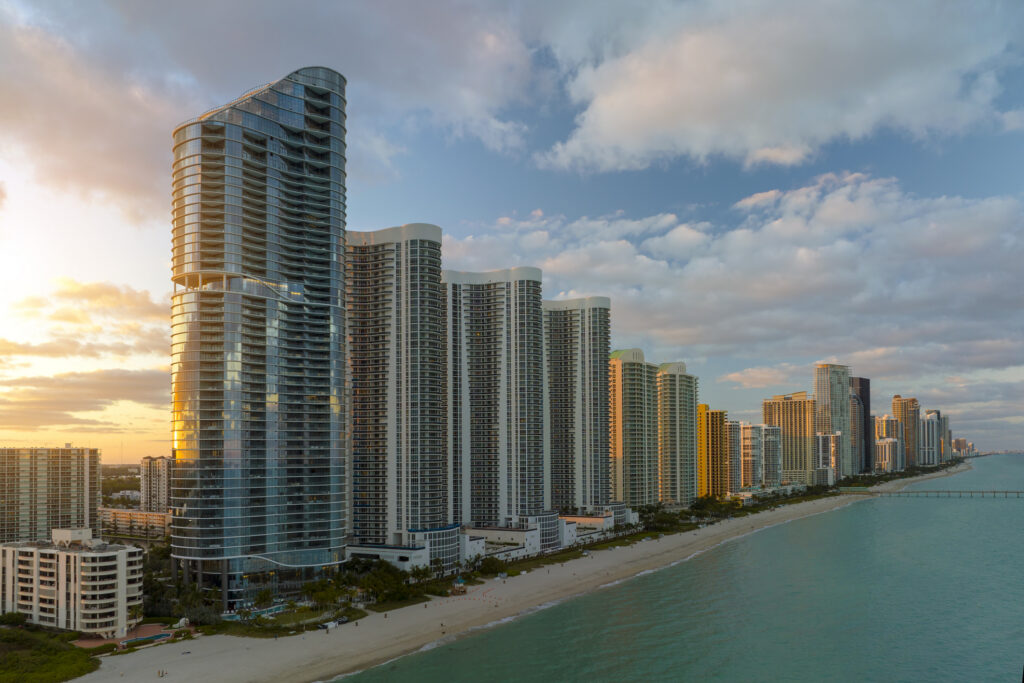
In Miami, that logic doesn’t always play out.
New construction is usually sold as the safer option. Everything is new. Systems, finishes, amenities. Fewer surprises, at least in theory.
In Miami, that logic doesn’t always play out.
When buyers say they want new, what they’re often really saying is that they want predictability. Something that feels easier to own. Less to think about once the deal closes. The problem is that some of the biggest variables don’t show up until after the sales center disappears and the building starts operating like a real place where people live.
The Gap Between Rendering and Reality
Developer quality is one of those variables. Not all developers build the same way, and not all stay involved once units are sold. Two buildings delivered the same year can look almost identical at launch and feel completely different five years later. Materials that photograph beautifully don’t always love heat, humidity, and salt air, no matter what the brochure suggests.
There’s also been a quiet shift in how new buildings are designed. Many push density hard. Less land. Tighter setbacks. Very little outdoor space. To compensate, the focus moves inward. Amenities get bigger, flashier, more experiential. Co-working lounges, screening rooms, spa floors, hospitality-style services meant to sell a lifestyle.
It looks great. It just costs a lot to keep going.
Those amenities don’t run themselves. They require staff, management, constant attention, and regular replacement. As operating costs rise, associations eventually have to make choices. Fees increase. Services get scaled back. Maintenance gets deferred. Usually it’s not one thing, but a slow mix of all three.
That’s where the gap between promise and reality tends to show up.
I see it most often in buildings that launched strong and sold heavily on branding and experience. Over time, economics start to matter more than the marketing did. Especially when a building attracted buyers for the lifestyle, not necessarily for the long-term ownership math.
Moving Beyond the “New Building” Shine
None of this means new construction is a bad idea. It just means it isn’t automatically a safer one.
The real question is what the building looks like once the shine wears off. Does the design still hold up? Are the amenities actually sustainable? Is there enough depth in the ownership to support the level of service that was sold at the beginning?
In Miami, newness doesn’t remove risk. It just moves it around.
The buyers who tend to do best aren’t anti–new construction. They’re just honest about what they’re buying. They look past the renderings and the launch energy and think about what ownership will feel like a few years in, when the building has settled into itself.
Ultimately, a wise investment in Miami real estate isn’t about finding the newest building. It involves looking for a property with strong bones and a sustainable future.
Are you considering buying or selling in Miami? Reach out today.
Barbara Gretsch, REALTOR®
Berkshire Hathaway HomeServices EWM Realty
📱 +1 773.208.2992 (Call or WhatsApp)
📧 barbaragretsch@gmail.com
🌐 www.barbaragretsch.ewm.com
Barbara Gretsch is a REALTOR® with Berkshire Hathaway HomeServices EWM Realty, serving Miami and South Florida’s $1M+ residential market, including Coconut Grove, Coral Gables, The Roads, Brickell, Key Biscayne, and Miami Beach. barbaragretsch.com