
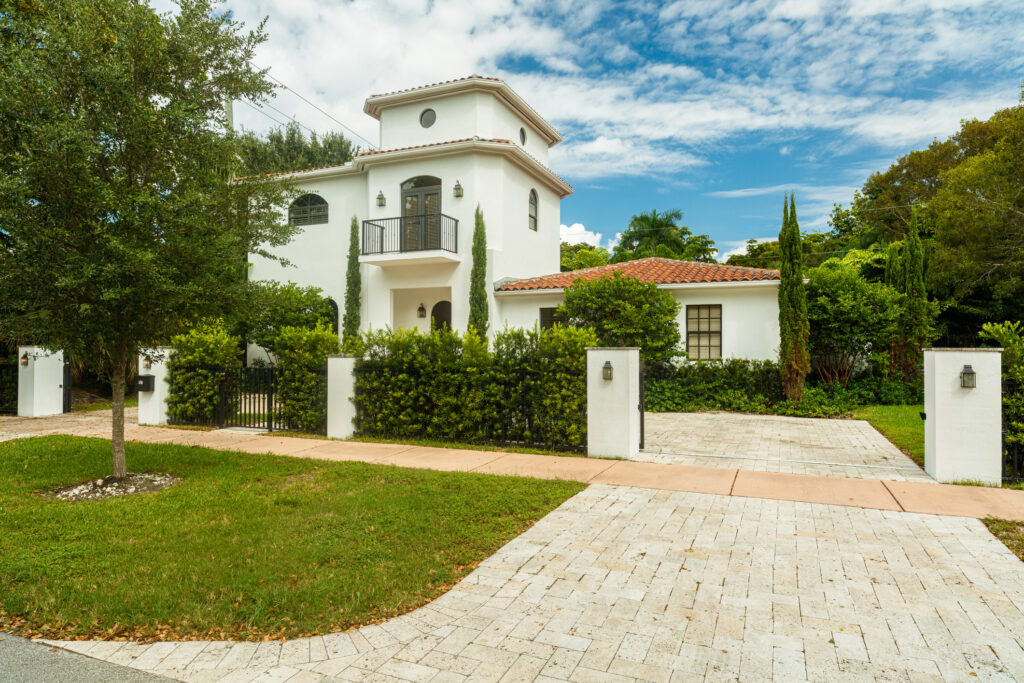
There’s a house in my neighborhood that I pass several times a week. It’s a modern rebuild, the kind we’ve seen all over Miami in recent years: white stucco, flat roof, clean lines. I like good contemporary architecture, but this one was built to catch a fleeting market spike rather than stand the test of time.
Every time I drive by, the “For Sale” sign leans a little more, the weeds grow taller, and I think how different the outcome could have been. With better presentation, thoughtful landscaping, and realistic pricing, it almost certainly would have sold when it had peak momentum.
That’s what many sellers underestimate: The first few weeks on the market are when a listing receives the most attention. If you miss that critical window, you’re no longer guiding interested buyers; you’re trying to reignite interest that has already moved on.
I keep a mental list of homes like that one, and lately, the list is growing rapidly.
What the Data Reveals About Why Listings Expire in Miami
The numbers support what I’m seeing on the ground. Last fall, Redfin found that 84.6% of Miami listings had been on the market for at least 60 days without a contract, one of the highest rates in the country. Miami also led the nation in homes pulled off the market entirely.
Yet according to the June 2026 MIAMI REALTORS® Market Report, total sales have now increased for ten consecutive months, and million-dollar closings are up almost 30%.
Buyers haven’t disappeared. They’re simply choosing different homes.
Three Core Reasons Why Listings Expire in Miami
1. Pricing on “Rear-View Mirror” Expectations
Almost every expired listing I review has the same root cause: It was priced on rear-view mirror expectations rather than today’s reality. A neighbor sold at a peak valuation in 2024, the seller added a premium for their recent upgrades, and an eager agent agreed to the price just to secure the listing.
But today’s buyers evaluate properties against current active competition, not past sales data. That’s especially true in Miami’s condo market, where inventory is high and buyers have more choices. While single-family homes in desirable neighborhoods retain strong leverage, buyers across all segments will overlook properties that ignore present-day market trends.
As of June 2026, the median Miami single-family seller received 95% of their original list price, while condo sellers hovered at 94%. If a property is overpriced by 10%, today’s buyers don’t make lowball offers. They simply pass it by.
2. Weak Visual Presentation and Property Staging
Presentation is about how a home feels to a buyer in the first ten seconds. Poor presentation quietly kills many listings before a showing is ever scheduled.
In luxury and high-rise markets, presentation requires high-end staging, clear spatial layout, and professional photography that conveys lifestyle and scale. It means correcting deferred maintenance, decluttering living spaces, and curating photography that highlights architectural details, light, and floor plan flow.
I’ve lost count of the number of waterfront condo listings I’ve seen where the images are clearly an afterthought: a series of photos that provide no sense of the home’s character, no feeling for the space, and no clear understanding of what the property actually offers.
When a property’s digital presence looks dark, cluttered, or flat, buyers assume the physical condition reflects the same lack of care. In a market where nearly half of condo transactions are cash purchases (often by out-of-town buyers deciding whether to book a flight based on the online listing alone), the visual assets are frequently the only showing a property will get.
3. Passive Marketing That Misses High End and Out-of-Town Buyers
If presentation is what buyers see, marketing is how they find it. Simply uploading photos to the MLS and placing a sign in the yard is not a marketing strategy. It is the bare minimum entry point.
True real estate marketing involves targeted geographic campaigns, private network distribution, multi-platform digital advertising, and positioning that speaks directly to high-net-worth buyers and relocation clients. Out-of-town buyers and executives don’t rely solely on local portal alerts; they interact with targeted video tours, digital editorial features, and hyper-local lifestyle campaigns. If your listing isn’t actively placed where these specific buyers consume media, it remains effectively invisible.
Relaunching an Expired Listing: How to Get It Right
An expired listing is not a final verdict. Recent industry tracking shows that roughly one in five delisted homes returns to the market within three months. And a significant portion of well-executed relists sell successfully.
However, the properties that successfully sell on their second attempt don’t just lower their price by a negligible amount; they undergo a complete brand repositioning. They re-enter the market with professional photography, clear floor plans, revised staging, framing that engages the target audience, and a clear pricing structure aligned with current market conditions.
Tailoring for Condos vs. Single-Family Homes
Miami functions as two distinct markets. Currently, single-family homes remain a seller’s market, while condos are firmly a buyer’s market. Any relaunch strategy must reflect these differences:
- Single-Family Homes: Often require refined pricing models, enhanced curb appeal, targeted digital outreach, and professional photo and video assets to highlight the property’s features and neighborhood amenities.
- Condominiums: Demand total operational and financial transparency upfront in addition to refined pricing, presentation, and marketing. Condo buyers expect immediate access to Structural Integrity Reserve Studies (SIRS), milestone inspection reports, fully funded HOA reserve documentation, and clear history on past or pending special assessments.
Successfully Relaunch Your Miami Listing
Rushing back onto the market with the exact same imagery and a 2% price drop signals to buyers that your property is lingering. Buyers track listing histories closely, and incremental adjustments rarely generate new momentum.
If you’re going to relist, make it count. Evaluate what the market communicated during the initial run. Then refresh your presentation, reposition the pricing, reintroduce the property with a fresh narrative, and give buyers a reason to look again.
Thinking of Relisting Your Miami Property?
If your home listing expired or was removed from the market without selling, a fresh perspective can make all the difference. Contact me today for a complimentary listing audit. I will review your previous positioning, analyze real-time market comps, and suggest a tailored relaunch strategy designed to secure results.
If you’d like to receive my posts in your inbox each week, subscribe to my Substack.
Barbara Gretsch is a REALTOR® with Berkshire Hathaway HomeServices EWM Realty, serving Miami and South Florida’s $1M+ residential market, including Coconut Grove, Coral Gables, The Roads, Brickell, Key Biscayne, and Miami Beach. barbaragretsch.com