
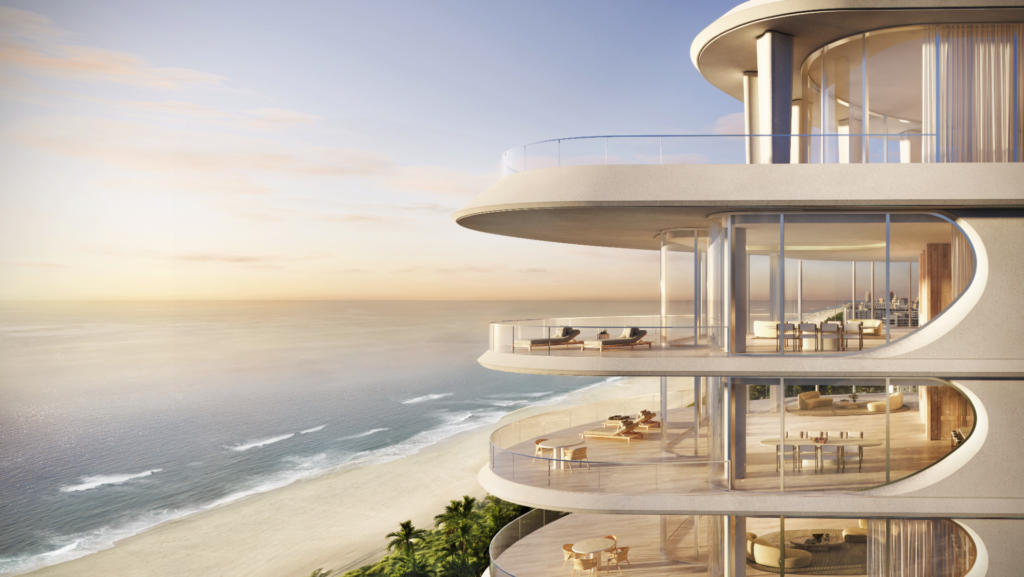
The wave of AI wealth leaving California is the single biggest force in Miami luxury real estate right now. Here is where it lands, and the two Miami Beach luxury condos built for it.
There is a new buyer on Collins Avenue. He lands from SFO on a Thursday, tours three buildings by Saturday, and wires cash before the following weekend. He is not browsing. He has already left California in his head. The paperwork is just catching up.
The New Buyer on the Sand
The names you know made the headlines. Larry Page bought $173 million of Miami real estate in December. Mark Zuckerberg set the local record with a $170 million purchase on Indian Creek. Palantir moved its headquarters to Miami in the first weeks of 2026, one of four corporate relocations to South Florida in two months. California’s proposed wealth tax gave all of it a deadline, and by the end of last year Miami had climbed from twentieth to fourth among the destinations searched by people leaving San Francisco.
But the billionaires are not the story. The story is the layer just beneath them: the founders who exited, the early AI employees whose stock vested into real money, the venture partners whose funds now run through Brickell. They are not buying compounds on private islands. They are buying condos on the sand, and they all want the same thing. New construction, full service, zero friction, and a building whose name their banker recognizes.
The Math Under the Migration
This buyer pays cash. Cash covered 56.5 percent of Miami condo closings late last year, and above $10 million it is more than 80 percent of sales. Meanwhile Miami Beach condo inventory has fallen to its lowest level since November 2024, and the broader market just posted its ninth straight month of annual sales growth. Shrinking supply, cash demand with a tax deadline behind it, and trophy oceanfront holding firm to record pricing. That is the whole equation.
Two Ways to Own the Sand
When this buyer calls me, I show two buildings, because they answer the two versions of the question.
The Shore Club Private Collection at 1901 Collins is the scarcity play. Forty-nine residences across three oceanfront acres, the first oceanfront work of Robert A.M. Stern Architects, with Auberge running the service. It is the choice for the founder who has already sold, thinks in decades, and wants the rarest thing on the island: land, sand, and almost no neighbors.
The Ritz-Carlton Residences at 1671 Collins is the service play. Thirty homes above the restored Sagamore, designed by Kobi Karp, with Ritz-Carlton staff downstairs. It is the choice for the operator still running a company on two coasts, who needs the home to run itself eleven months a year and be perfect the twelfth.
Same beach, two different answers. One buyer is buying permanence. The other is buying time. Both are buying something Miami Beach cannot make more of, which is the point. My full guide to the island’s signature buildings is here.
If You Own on the Beach
If you already own oceanfront in South Beach, understand who is bidding now. This buyer moves in days, pays cash, and does not haggle over the right product, but walks instantly from the wrong one. Presentation and positioning have never mattered more, because the person on the other side of the table evaluates a residence the way they evaluated companies. Quickly, and only once.
If you are wondering what that means for your specific line and floor, reply to this post or reach me at barbaragretsch.com. I will give you the real number and the honest story behind it.
Barbara Gretsch · Miami Real Estate
Buying or Selling in Miami?
Tell me what you are looking for and I will give you a straight answer, grounded in real market data.
If you would like to receive my posts in your inbox each week, subscribe to my Substack here.
Barbara Gretsch is a REALTOR® with Berkshire Hathaway HomeServices EWM Realty, serving Miami and South Florida’s $1M+ residential market, including Coconut Grove, Coral Gables, The Roads, Brickell, Key Biscayne, and Miami Beach. barbaragretsch.com